
Car interiors can look clean after vacuuming, yet still hold onto bacteria, odors, and fine debris below the surface. Upholstery fibers trap contaminants, vents circulate dust, and many interior cleaners focus on visible dirt rather than deeper sanitation. Over time, this hidden buildup can affect both cleanliness and cabin air quality.
Steam cleaning uses controlled heat and minimal moisture to clean interior surfaces without relying on chemical-heavy products. When performed correctly, it helps break down embedded residue while reducing the risk of oversaturation.
Understanding what is car steam cleaning makes it easier to decide when this method is appropriate for your vehicle’s interior.
What Is Car Steam Cleaning
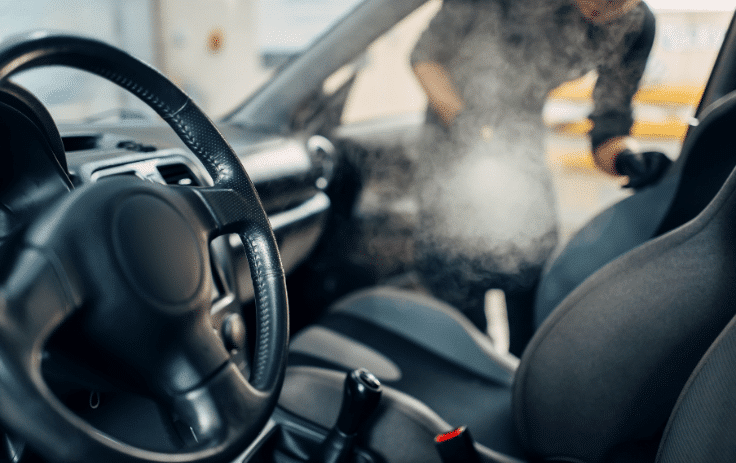
Car steam cleaning is a detailing method that uses high-temperature, pressurized steam to clean and sanitize vehicle interiors with minimal moisture and without heavy chemical cleaners.
The steam penetrates fabrics and textured surfaces to loosen grime, reduce odor-causing bacteria, and lift embedded dirt from areas such as seats, carpets, dashboards, vents, and tight seams.
Because the process uses very little water, it limits moisture buildup while still providing a deep, thorough clean when performed correctly.
Benefits of Car Steam Cleaning
Car steam cleaning offers several practical benefits for interior maintenance by using high-temperature steam and minimal moisture. The following points explain how this method supports cleaner surfaces and improved interior hygiene.
Reduces bacteria and allergens
High-temperature steam helps neutralize bacteria and allergen buildup inside upholstery, carpets, and vents. This supports a cleaner interior environment without relying on chemical disinfectants.
Uses very little water
Steam cleaning applies controlled heat with minimal moisture, which limits water absorption in fabrics and reduces the chance of dampness or lingering odors after cleaning.
Breaks down grease and residue
The heat from the steam loosens oils, grime, and stuck-on residue, allowing dirt to be lifted from textured surfaces instead of being pushed deeper into materials.
Leaves no chemical residue
Because the process relies on heat rather than liquid cleaners, it leaves little to no chemical residue behind, making it suitable for interiors where minimal product buildup is preferred.
What Parts of a Car Can Be Steam Cleaned?
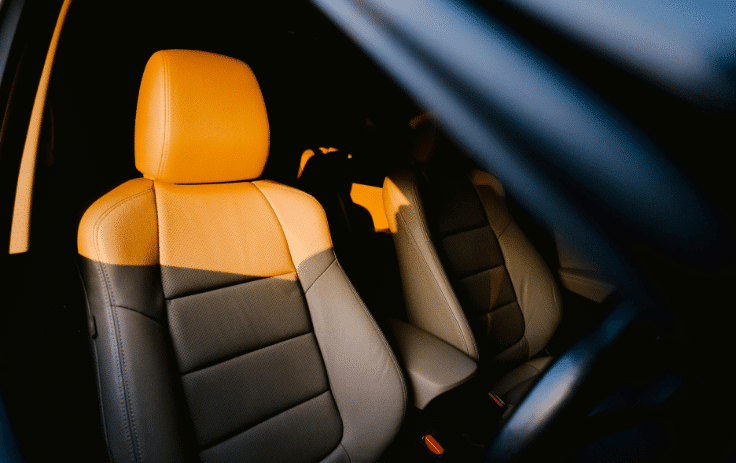
Steam cleaning works well on many interior surfaces, but not all. Results depend on the material and how the heat is applied. Below are the areas where steam cleaning is commonly used, along with important considerations.
Fabric seats and carpets
Steam penetrates deep into fabric fibers to loosen embedded dirt, body oils, and residue without saturating the padding underneath. Because it uses minimal moisture, it’s often effective for spot treatment and light deep cleaning while helping reduce the risk of prolonged dampness in carpets and seat foam.
Leather and vinyl surfaces
Steam can be used on textured leather and vinyl surfaces when applied carefully and briefly. The heat helps lift dirt from pores and grain patterns, making cleaning more effective than surface wiping alone. However, excessive heat or dwell time can dry out leather, which is why conditioning is typically recommended afterward.
Dashboard, center consoles, and door panels
Interior panels often have seams, buttons, and textured areas that trap grime. Steam allows these areas to be cleaned more thoroughly by loosening buildup in crevices that cloths and brushes may not fully reach.
Air vents and interior seams
Steam is especially useful for vents, stitching, and tight seams where dust accumulates and air circulation spreads particles throughout the cabin. Targeted steam application helps dislodge debris from these narrow spaces.
Where caution is required
Steam should be used carefully around exposed electronics, infotainment screens, sensors, and unsealed switches. Direct heat or moisture in these areas can cause damage unless handled by a professional using controlled techniques and specialized attachments.
Steam Cleaning vs Shampooing: What’s the Difference?
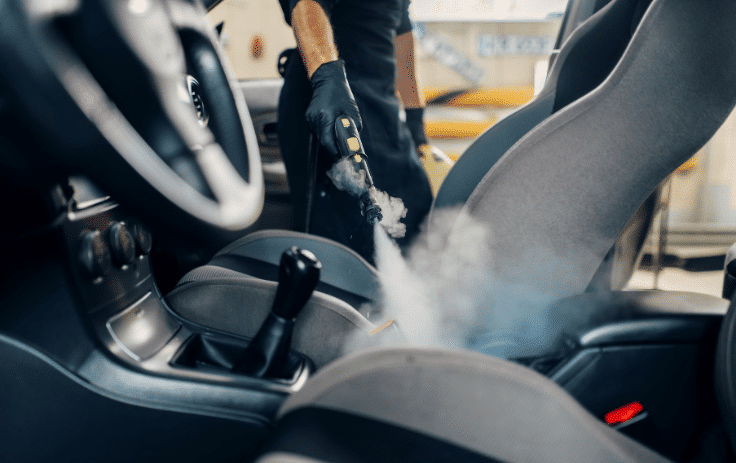
Steam cleaning and shampooing are both used to clean vehicle interiors, but they work in very different ways. The main difference comes down to heat versus liquid, and how much moisture is left behind in the process.
Steam cleaning
Steam cleaning uses high-temperature vapor applied in controlled amounts to loosen dirt, oils, and residue from interior surfaces. Because it relies on heat rather than soaking materials, it uses very little water and allows fabrics to dry more quickly.
This makes steam cleaning useful for surface sanitation, odor reduction, and cleaning tight or textured areas where excessive moisture could be a concern.
Shampooing
Shampooing on the other hand, involves applying a liquid cleaning solution to carpets or upholstery and agitating it with brushes before extracting it with water.
This method is effective for removing heavy soil, deep stains, and ground-in debris, but it introduces significantly more moisture into the material. As a result, drying times are longer, and improper extraction can leave residue or dampness behind.
In practice, steam cleaning is often used for maintenance cleaning and targeted areas, while shampooing is better suited for heavily soiled interiors that require deeper flushing. Choosing between the two depends on the condition of the interior, the type of material being cleaned, and how quickly the vehicle needs to dry.
Is Steam Cleaning Good For a Car?
Yes — steam cleaning is good for a car’s interior when it’s used on suitable surfaces and applied correctly. It uses high-temperature steam with very little moisture to loosen dirt, reduce bacteria, and clean hard-to-reach interior areas without relying on heavy chemical cleaners. This makes it effective for maintaining fabrics, vents, seams, and textured surfaces.
However, steam cleaning isn’t appropriate for every interior component. Direct steam or excessive heat on sensitive electronics, infotainment screens, or unsealed switches can cause damage.
When proper heat control and technique are used, steam cleaning is a safe and effective option for cleaning a car’s interior.
How Often Should You Steam Clean Your Car?

Most vehicles only need steam cleaning every 3 to 6 months as part of routine interior maintenance. This frequency is usually enough to control bacteria, odors, and surface buildup without overexposing interior materials to heat.
For cars that see heavy use—such as daily commuting, rideshare driving, transporting pets, or carrying children—steam cleaning may be helpful every 1 to 3 months, especially for fabrics and high-touch areas. Light, targeted steam cleaning can also be done as needed for spills or localized odors rather than treating the entire interior each time.
When to Choose Professional Car Steam Cleaning
Professional car steam cleaning is often considered when an interior needs more thorough sanitation or when standard cleaning methods haven’t fully addressed odors, buildup, or hygiene concerns. Trained detailers use equipment that allows for controlled steam temperature and pressure, which helps reduce the risk of heat or moisture-related issues on modern interior materials.
Book Your Interior Steam Cleaning Service Today
If your car’s interior needs deeper cleaning than basic methods can provide, professional steam cleaning is a safe and effective option. At Archer’s Mobile Detailing, we assess your interior and apply steam where it’s appropriate to help reduce buildup and odors without excessive moisture or harsh chemicals.
Call (254) 500-2468 or book online to schedule your detailing service. We proudly serve Leander, TX, along with Cedar Park, Georgetown, Liberty Hill, Round Rock, Lago Vista, and Austin.
